33
Jesus His Commandment
- Lay up for yourselves treasures in heaven Matthew 6:19-21
This Primary Bible reference is a unique Bible reference according to the words of Jesus, which best summarizes this step.
- Take no thought for your life, what ye shall eat, or what ye shall drink; nor yet for your body, what ye shall put on
All Jesus His steps can be grouped into the Ten Commandments from the Old Testament (Exodus 20).

Direct Bible References
Extra direct Bible references which expands or explain the same step.
- Matthew 6:24-25 (Author: 'Jesus')
- Matthew 12:34-35 (Author: 'Jesus')
- Matthew 19:21 (Author: 'Jesus')
- Luke 16:13 (Author: 'Jesus')
- Galatians 6:6 (Author: 'Paul')
- Colossians 3:1-2 (Author: 'Paul')
- 1 Timothy 6:17-19 (Author: 'Paul')
- James 5:1-3 (Author: 'James')
Indirect Bible References
Extra, more indirect Bible references, relating to the same step.
- Exodus 35:29 (Author: 'Moses')
- Psalms 62:11 (Author: 'David')
- Habakkuk 2:9 (Author: 'HEERE')
- Haggai 1:4-11 (Author: 'Haggai')
- Malachi 3:8-10 (Author: 'Malechi')
- Luke 12:33-34 (Author: 'Jesus')
- Philippians 3:20 (Author: 'Paul')
- Revelation 3:20 (Author: 'Jesus')
OT Law Bible References
Old Testament Law Bible references which will relate to OT Commandments (Jewish tradition teached that there are 613 commandments or mitzvot in the Torah).
- Leviticus 25:14 (OT Law nr: '336', Rambam Title: 'To adjudicate cases of purchase and sale', Rambam Coding: 'CCA67' )
Example Bible References
In these Bible references you will find examples and testimonies how this step was being executed.
Please click on the Bible Reference to show its corresponding text.
- Genesis 41:47-49
(Author: 'Joseph') - Luke 12:16-21
(Author: 'Jesus') - 1 Corinthians 9:11-14
(Author: 'Paul')
Wisdom Bible References
Wisdom Bible references will relate to one of the Wisdom Literare Books from the Old Testament.
Please click on the Bible Reference to show its corresponding text.
- Proverbs 1:17-19
(Author: 'Solomon') - Proverbs 11:4
(Author: 'Solomon') - Proverbs 11:28
(Author: 'Solomon') - Proverbs 13:22
(Author: 'Solomon') - Proverbs 15:16
(Author: 'Solomon') - Proverbs 21:13
(Author: 'Solomon') - Proverbs 22:9
(Author: 'Solomon') - Proverbs 23:4
(Author: 'Unknown') - Proverbs 31:16
(Author: 'Solomon') - Ecclesiastes 5:9
(Author: 'Solomon')
Duplicate Bible References
Another Bible reference to more or less the same as the primary, direct or indirect, with not much new information, although it will confirm the same Bible references:
Please click on the Bible Reference to show its corresponding text.
- Luke 6:45
A good man out of the good treasure of his heart bringeth forth that which is good; and an evil man out of the evil treasure of his heart bringeth forth that which is evil: for of the abundance of the heart his mouth speaketh. (Author: 'Jesus') - Luke 18:22
Now when Jesus heard these things, he said unto him, Yet lackest thou one thing: sell all that thou hast, and distribute unto the poor, and thou shalt have treasure in heaven: and come, follow me. (Author: 'Jesus')
Study Bible References
Extra Bible references (most often larger parts of Bible books) which are good for extra study on this step:
Please click on the Bible Reference to show its corresponding text.
- Exodus 35:4-29
¶ And Moses spake unto all the congregation of the children of Israel, saying, This is the thing which the LORD commanded, saying, Take ye from among you an offering unto the LORD: whosoever is of a willing heart, let him bring it, an offering of the LORD; gold, and silver, and brass, And blue, and purple, and scarlet, and fine linen, and goats’ hair, And rams’ skins dyed red, and badgers’ skins, and shittim wood, And oil for the light, and spices for anointing oil, and for the sweet incense, And onyx stones, and stones to be set for the ephod, and for the breastplate. And every wise hearted among you shall come, and make all that the LORD hath commanded; The tabernacle, his tent, and his covering, his taches, and his boards, his bars, his pillars, and his sockets, The ark, and the staves thereof, with the mercy seat, and the vail of the covering, The table, and his staves, and all his vessels, and the shewbread, The candlestick also for the light, and his furniture, and his lamps, with the oil for the light, And the incense altar, and his staves, and the anointing oil, and the sweet incense, and the hanging for the door at the entering in of the tabernacle, The altar of burnt offering, with his brasen grate, his staves, and all his vessels, the laver and his foot, The hangings of the court, his pillars, and their sockets, and the hanging for the door of the court, The pins of the tabernacle, and the pins of the court, and their cords, The cloths of service, to do service in the holy place, the holy garments for Aaron the priest, and the garments of his sons, to minister in the priest’s office. ¶ And all the congregation of the children of Israel departed from the presence of Moses. And they came, every one whose heart stirred him up, and every one whom his spirit made willing, and they brought the LORD’s offering to the work of the tabernacle of the congregation, and for all his service, and for the holy garments. And they came, both men and women, as many as were willing hearted, and brought bracelets, and earrings, and rings, and tablets, all jewels of gold: and every man that offered offered an offering of gold unto the LORD. And every man, with whom was found blue, and purple, and scarlet, and fine linen, and goats’ hair, and red skins of rams, and badgers’ skins, brought them. Every one that did offer an offering of silver and brass brought the LORD’s offering: and every man, with whom was found shittim wood for any work of the service, brought it. And all the women that were wise hearted did spin with their hands, and brought that which they had spun, both of blue, and of purple, and of scarlet, and of fine linen. And all the women whose heart stirred them up in wisdom spun goats’ hair. And the rulers brought onyx stones, and stones to be set, for the ephod, and for the breastplate; And spice, and oil for the light, and for the anointing oil, and for the sweet incense. The children of Israel brought a willing offering unto the LORD, every man and woman, whose heart made them willing to bring for all manner of work, which the LORD had commanded to be made by the hand of Moses. (Author: 'Moses')
Legend
Bible verses copyright: PUBLIC DOMAIN except in the United Kingdom, where a Crown Copyright applies to printing the KJV. See http://www.cambridge.org/about-us/who-we-are/queens-printers-patent
Click here to see the explanation of the different symbols, Author, OT Law etc.
- A related Bible reference to the step which is negative, something you should not do
- A related Bible reference to the step which is both positive and negative
- A related Bible reference to the step which is positive, something you should do or learn from
- A related Bible reference to the step which is not yet determined positive or negative
- Author: Indicates the known author from this Bible reference
- OT Law nr: Jewish tradition teached that there are 613 commandments or mitzvot in the Torah. We list the Number, based on a chronological order (Genesis, Exodus, Leviticus, Numeri, Deuteronomium).
- Rambam Title: This is the commandment, as an interpretation of Rambam (commonly known as Maimonides)
- Rambam Coding: The coding refers to the commandments layout of Rambam. Rabbi Chafetz Chayim wrote a book with all the commandments which can still be observed today. The book is called 'The Concise Book of Mitzvoth'
- CCA means a positive mitzwe (which can now also be carried out outside of Israel).
- CCN is the negative mitzwe (which can now also be carried out outside of Israel).
- CCI means that this mitzvah can only be performed in the State of Israel.
Who came up with this "613 Mitzvot"?
Rabbi Moshe ben Maimon, His full name was Rabbi Moses Ben Maimon. His name formed the acronym as "The Rambam" was born on the 14th of Nisan 4895 (30th March 1135) and he died on the 20th of Tevet of 4965 (Dec. 13 1204). The Rambam was one of the most saught after individuals of his time. Not only as a Halachic authority, but also within the secular world of kings and sultans, for his vast knowledge of secular medecines was outstanding. When writting the Mishna Torah, Ramban reviewed the Torah's Mitzvot, and he itemized them. He seperated the positive and negative mitzvot, listed them, all 613, and discussed them."if you own something you can't give up, you don't own it, it owns you"
Quote by: Jim Elliott

Drawings
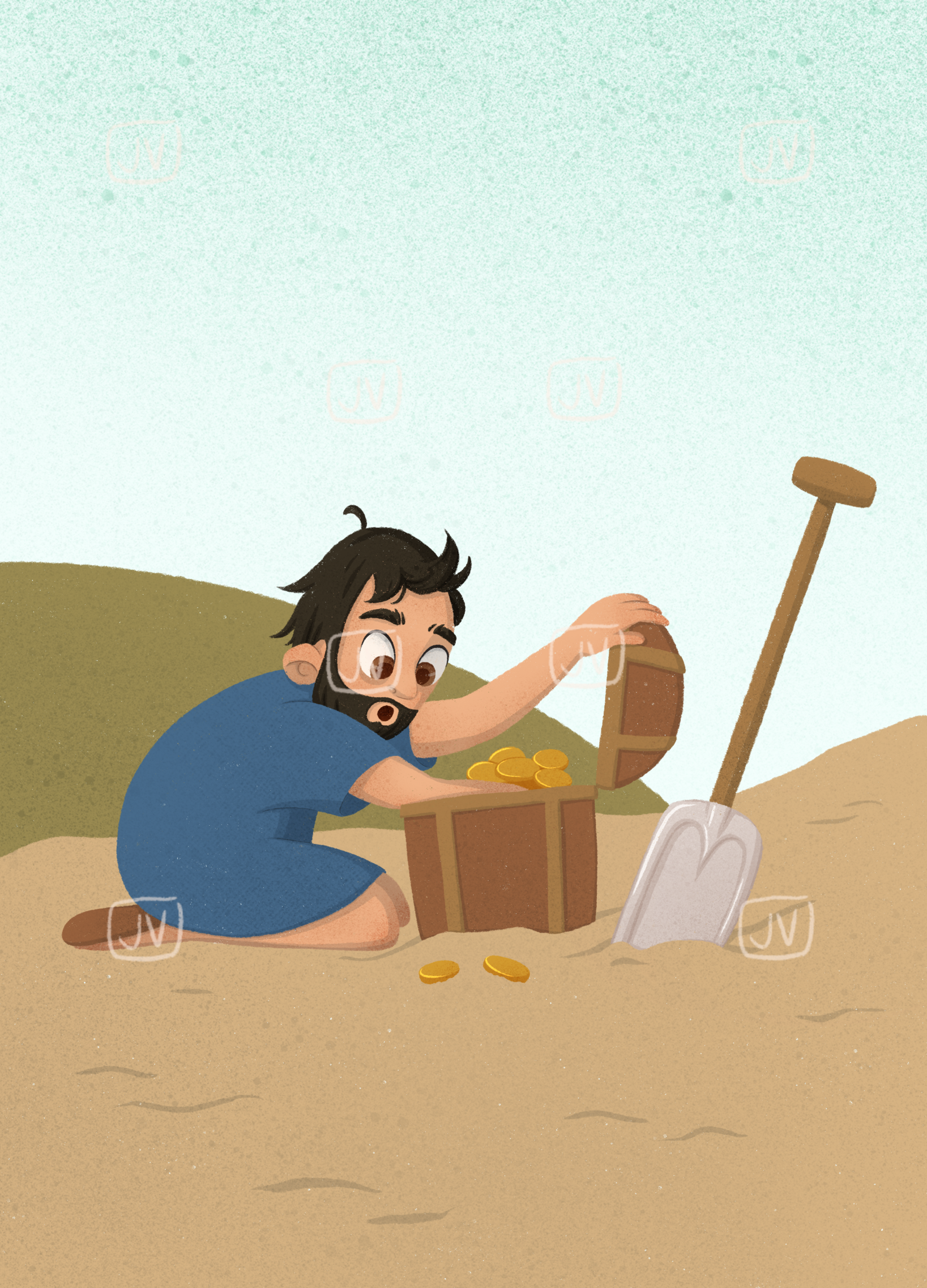
Artist: Jenske Visser
Resource Language Settings
Below you will find all kinds of related resources to this step, to help you grow. Resources can be Sermons, Testimonies, Movies, Shortmovies, Songs, Blogs or Books. You can select multiple languages if you like to see those resources in more languages.Do you know more good resources in your language which can be added to this list? Please contact us so we can add it (or register and you can add it yourself!

Short Movies
The Beat by Allan Parr - 7 principles on how every Christian should manage their money
Did you know that Jesus spoke more about money than any other subject in the gospels? That means that God expects us to be good stewards with the money He has blessed us with. So, in this video I share with you 7 biblical principles on how to be a good steward of the money God has blessed us with.
Moving Works - Vapor
Inspired by the age-old question "What is your life?", this short film challenges the promises of the American dream and presents an alternative that offers so much more.
BibleProject - Why Jesus Said You Can’t Serve Both God and Money

Songs
Selah - More And More Of You
Joshua Generation Church - Treasure
Jon Reddick - Yield

Sermons
Francis Chan - Jouw leven als een touw
BibleProject - Podcast: What Kind of Treasure Is in Heaven?

Questions
Share your hearts together by discussing the following questions:
- Is there anything you don't understand within this step?
- Wat appeals to you about all Bible references and resources?
- How do you apply this step in your life or do you experience any boundaries?
- How do you deal with tithes and voluntary offerings?
- How do you think you as a Christian should deal with saving or investing?
- Is there anything you could not give up?
- What are your treasures?
- Which of the 7 points mentioned by Alan Parr do you do/do not do and/or do you find difficult?